Do-Along STEM · Book 5
Finn and the Sink-or-Float Boat
A Do-Along STEM Book About Sinking and Floating
Meet the job Marine scientist
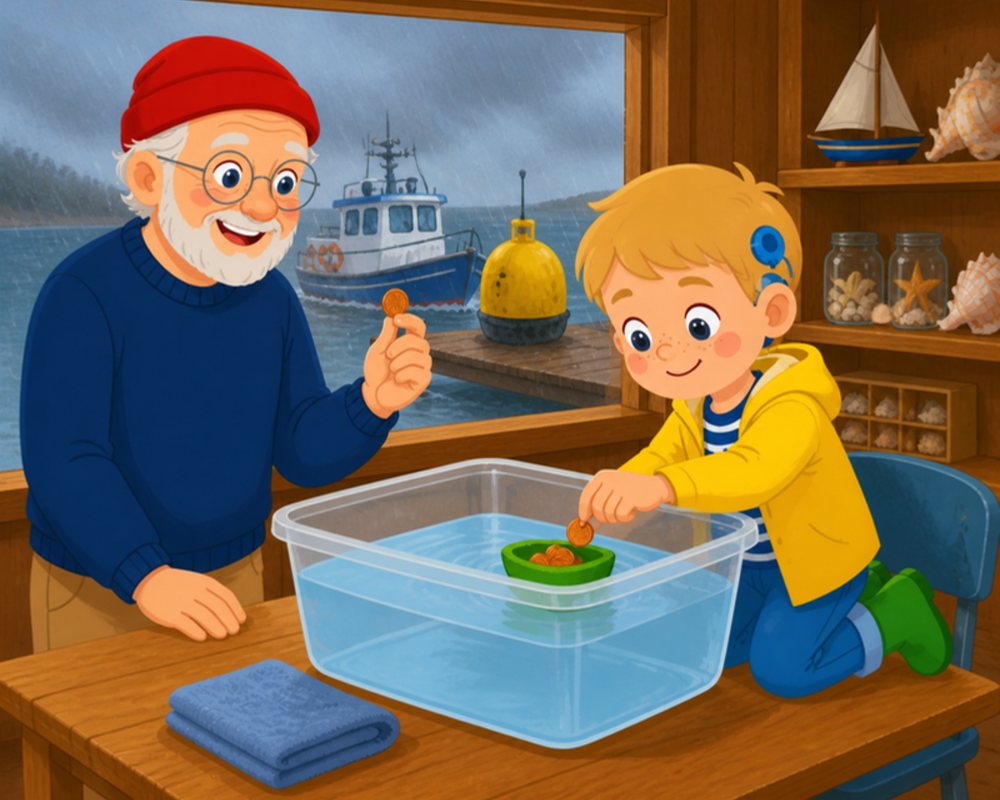
It’s a stormy day at Grandpa’s marine station, and no boats can go out. Finn has a question: Grandpa’s research boat is made of heavy steel, so why doesn’t it sink? With a lump of clay and a tub of water, Finn tests a ball, a pancake and a boat. Then he loads his boat with pennies, one at a time, until GLUG! Can a new shape carry more? Finn finds out what marine scientists know: same clay, new shape!
Coming soon on Amazon Play Cargo Boat
Get the book
-
The paperback
The printed book is coming soon on Amazon.
Coming soon on Amazon -
Printable boat test sheet
The boat test sheet from page 31 to fill in, and the Harbor Master’s cheat sheet for grown-ups.
Download
What you need
- A lump of modeling clay about the size of a lemon (not play dough, which goes soggy)
- A big bowl or tub of water, and a towel
- About 30 pennies (or marbles, or metal washers)
- An empty plastic bowl or cup
- A pencil, paper and crayons
Time: 20 to 30 minutesMess: a little waterAges: 5 to 8
Your job: be the Harbor Master
- Fill the tub, and stay with it. Young children can drown in a little water.
- Keep the pennies on the table, away from little ones. Coins are a choking risk.
- Keep a towel close for splashes, and dry hands before using paper.
- Empty the tub when you’re done.
Reading with a class? You are the Harbor Master. Put one tub of water at the front, give each small group a lump of clay and a cup of pennies, and test the boats one at a time while the class counts the pennies out loud.
Peek inside
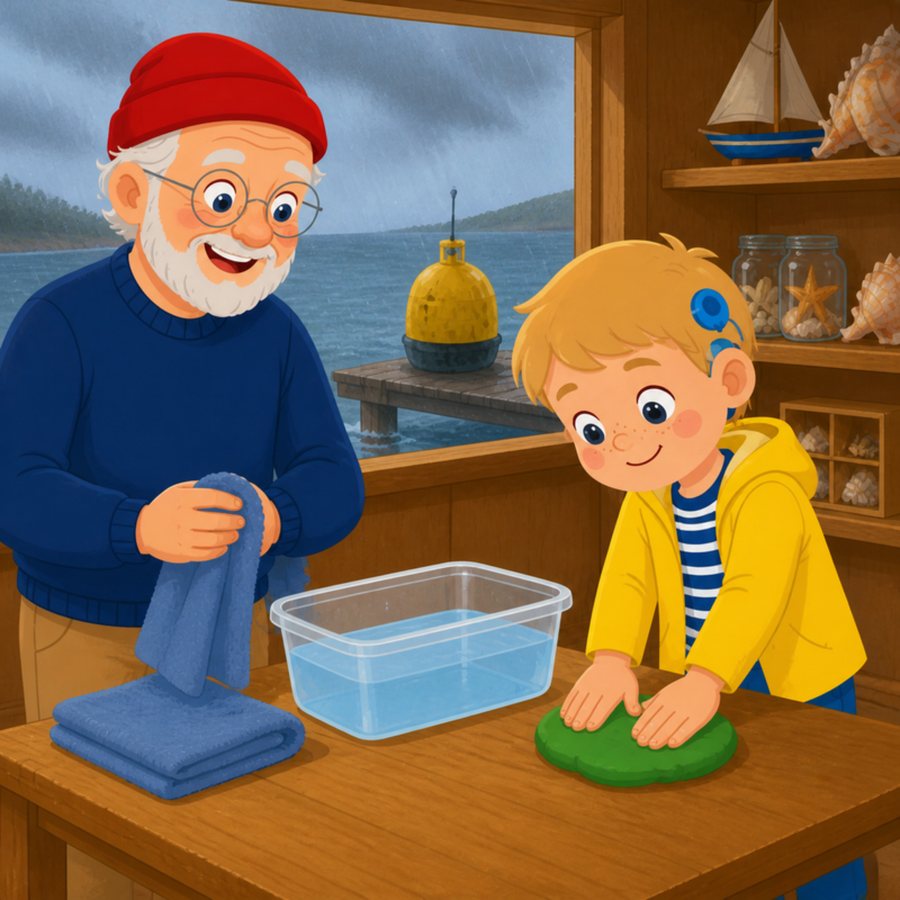
Same clay, new shape: a flat pancake. Water sloshes over the edge, and down it goes.
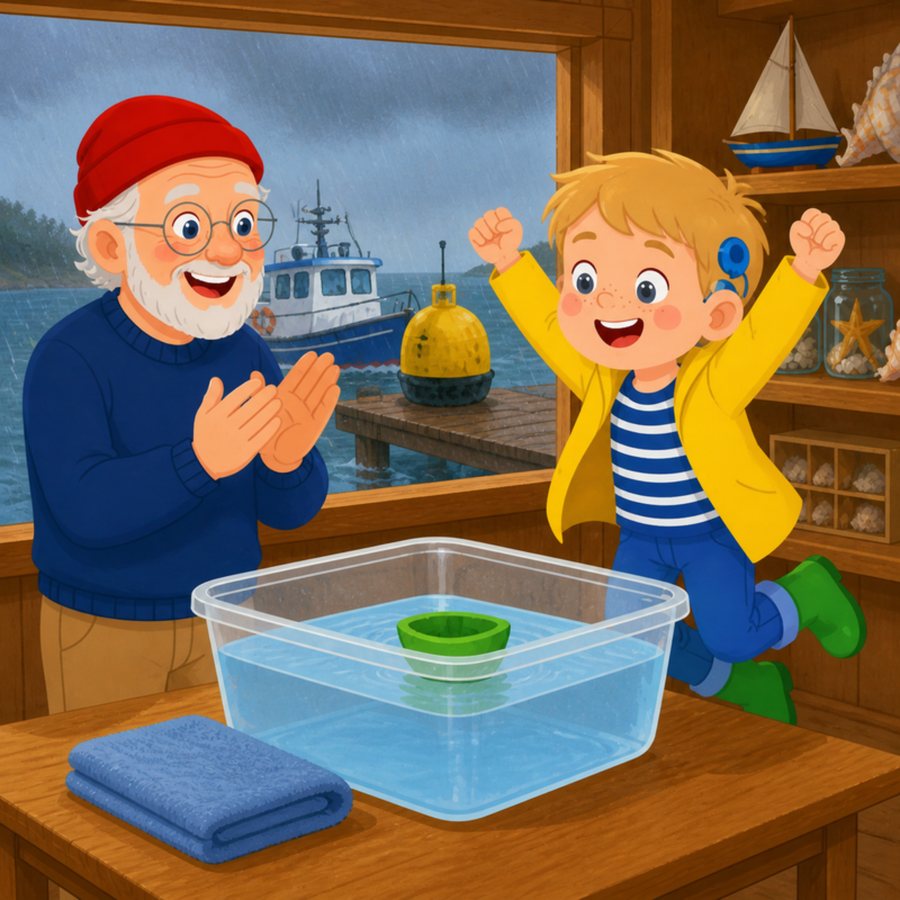
A hull with walls all around keeps the water out. The boat floats!
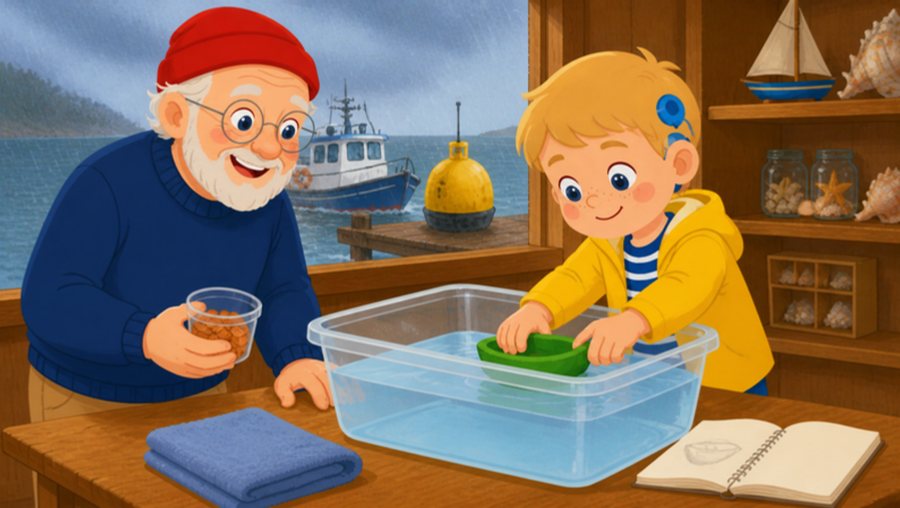
Nineteen pennies! Spread it wide, and it carries more.
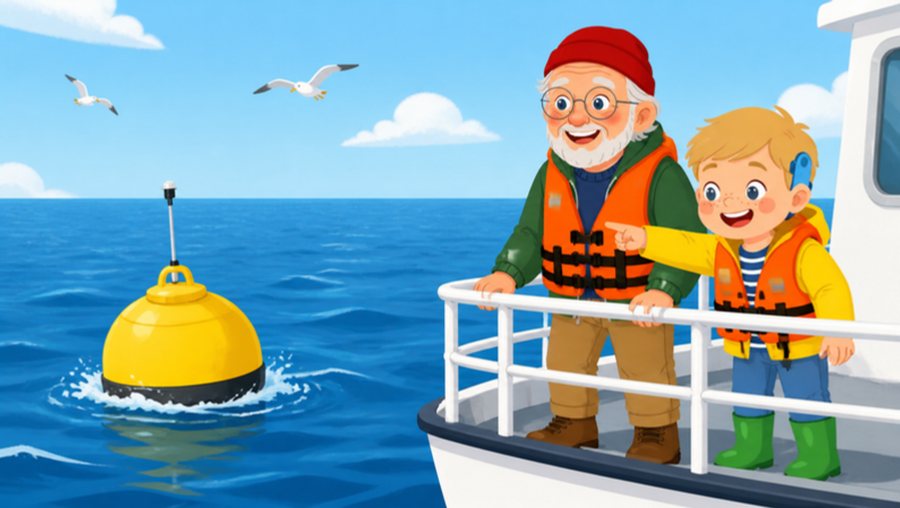
Out at sea, the heavy buoy splashes into the waves, and floats.
Play Cargo Boat
After the book, children can test Finn’s lump of clay on screen. They shape it into a ball, a pancake, a small boat or a wide boat, guess whether it will sink or float, then put it in the tub. Boats that float can carry cargo: children add pennies one at a time and count out loud until GLUG! The ship log and the penny chart fill in as they go, and when both boats have carried their cargo, the storm passes and Grandpa’s boat takes the buoy out to sea.
Works on tablets, phones and computers. Nothing to install, nothing to sign up for. The game’s boats carry the same number of pennies as Finn’s. Clay boats at home will carry their own numbers, so test yours too.
For teachers
This book supports these kindergarten to grade 2 engineering standards, and builds toward a grade 3 one:
- K-2-ETS1-2 Make a simple drawing or model to show how the shape of an object helps it do its job.
- K-2-ETS1-3 Compare test results from two objects designed to solve the same problem.
- 3-PS2-1 Grade 3: find out how balanced and unbalanced pushes affect how an object moves.
What do marine scientists do?
They study the ocean and everything in it, from tiny plankton to giant whales. They ask questions, take measurements and test their ideas. Just like you did.
Did you know? Big ships have a line painted on their side. When a ship is loaded, the water must stay below the line. A law in 1876 made these lines a rule. Source: Royal Museums Greenwich: Samuel Plimsoll and ship safety
Story and activities: Dr. Shane Wines.