Do-Along STEM · Book 2
Zuri and the Zigzag Bridge
A Do-Along STEM Book About Strong Shapes
Meet the job Structural engineer
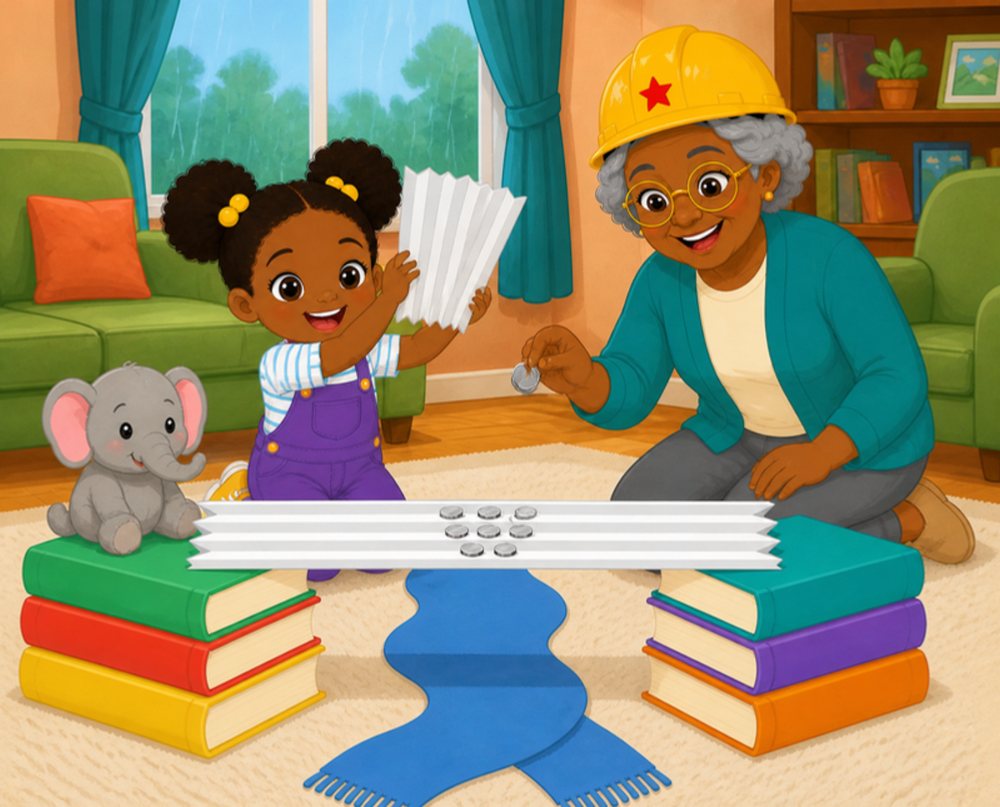
It’s a rainy afternoon, and Tembo the toy elephant is stuck on one side of the Great Blue River. Inspector Grandma has one rule: one sheet of paper, and the bridge must hold ten coins. Zuri’s flat bridge holds two. Her zigzag bridge holds zero. Then she gives it a quarter turn, and finds out what structural engineers know: shape can make a thing strong.
Coming soon on Amazon Play Bridge Test
Get the book
-
The paperback
The printed book is coming soon on Amazon.
Coming soon on Amazon -
Printable test sheet
The bridge test sheet from page 31 to fill in, and the Inspector’s cheat sheet for grown-ups.
Download
What you need
- 3 sheets of plain paper, all the same kind
- 6 books, for two stacks of the same height
- 40 coins that are all the same, such as pennies
- A small, light toy that needs to cross a river
- A blue scarf or towel for the river, or just pretend
- A hat for the Inspector, and a pencil
Time: 20 to 30 minutesMess: noneAges: 5 to 8
Your job: be the Inspector
- Test every bridge the same way. Same gap. Same coins. Same spot.
- Add coins one at a time, in the middle. Count out loud.
- Don’t fix the bridge. Ask, “What did you see? What could you change?”
- When a bridge falls, say, “Not a fail. A clue!”
Reading with a class? You are the Inspector. The class is the engineering team. Build at the front, or give each pair their own paper and coins. Keep coins away from children under 3.
Peek inside
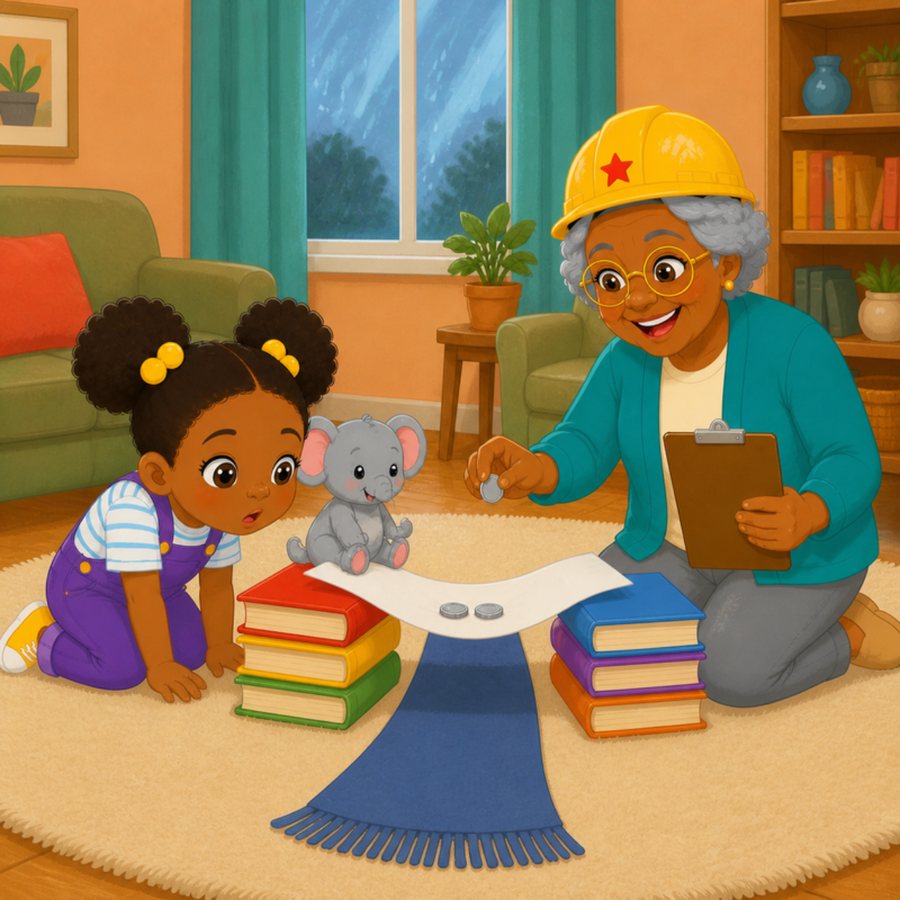
Bridge test number one: the flat bridge sags under two coins. The third one sinks it.
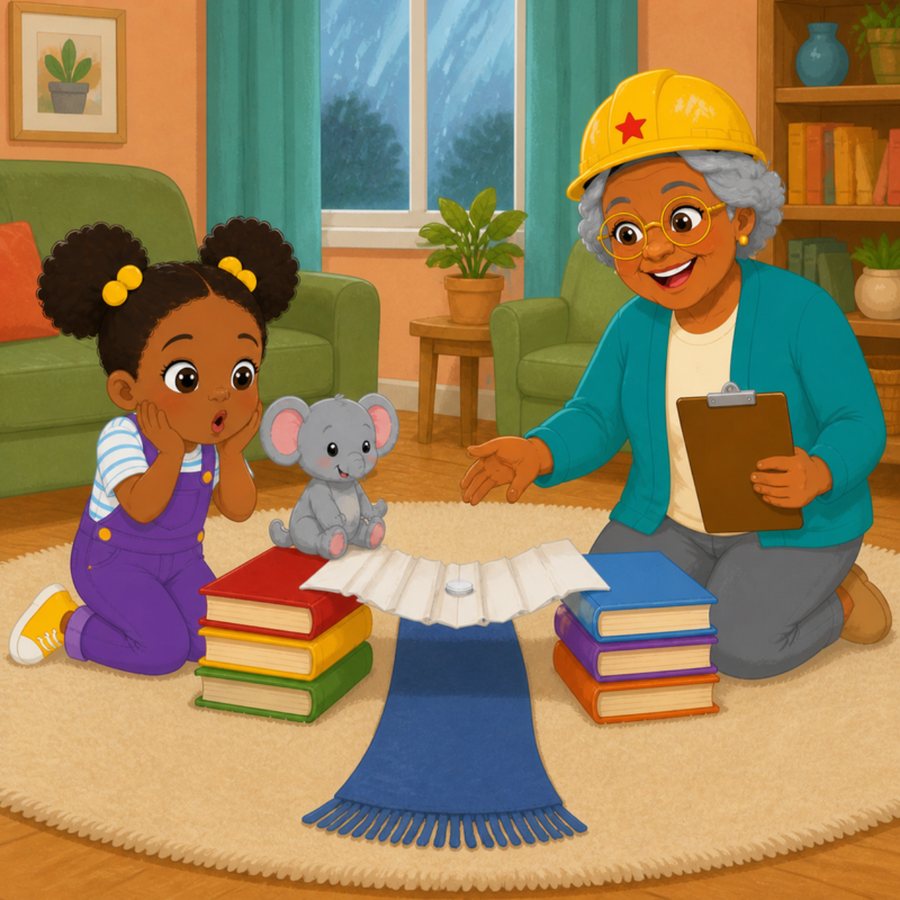
The zigzag’s folds run the same way as the river. One coin, and it slumps into the water.
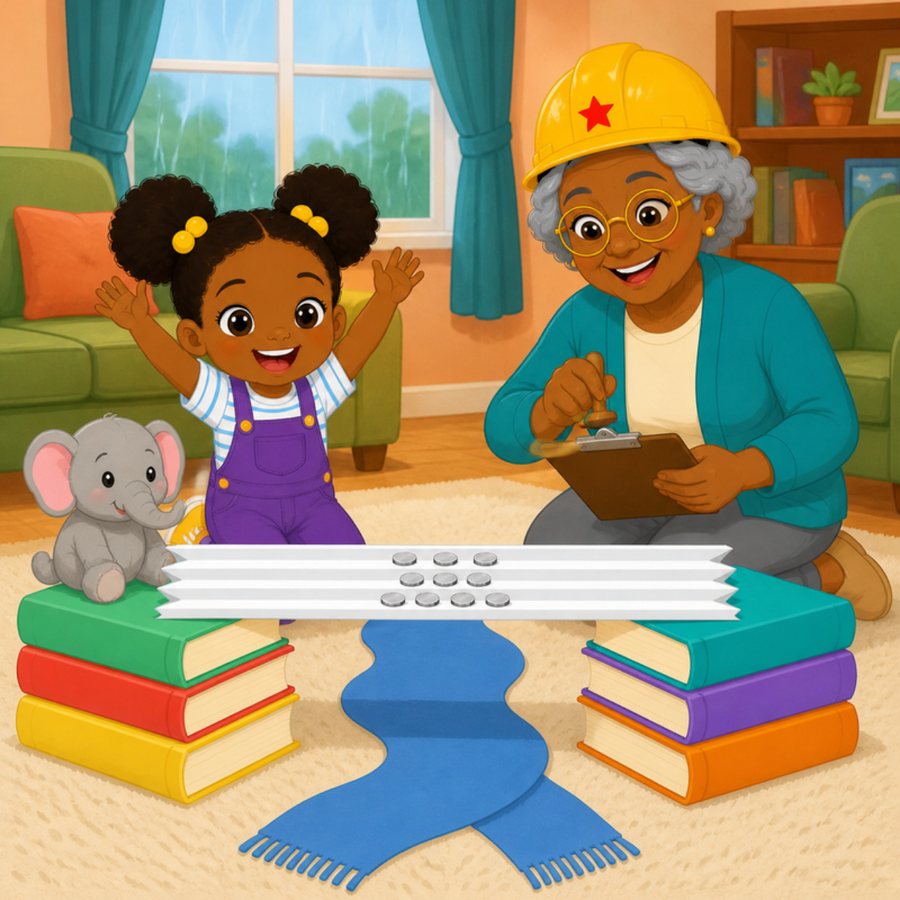
A quarter turn, so every fold reaches from stack to stack. Ten coins. BRIDGE OPEN!
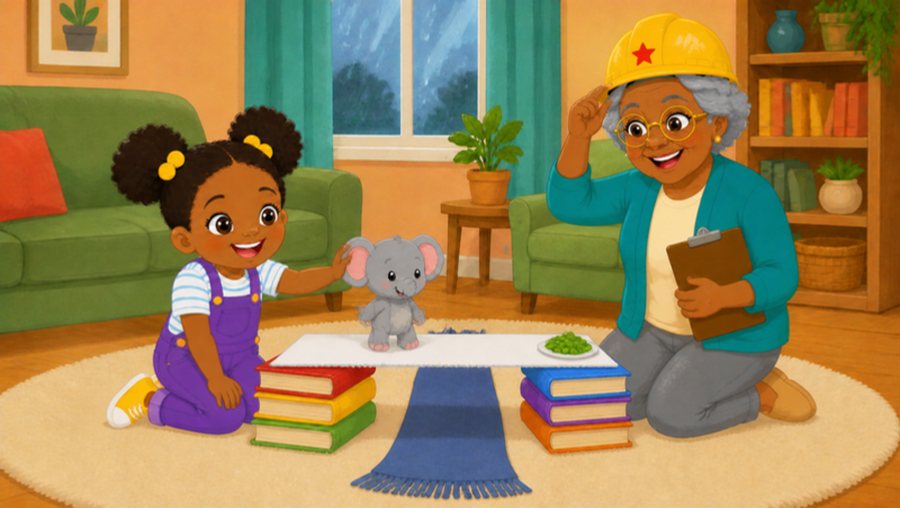
Zigzags for strong. Flat for the road. Tembo crosses the Great Blue River.
Play Bridge Test
After the book, children can test Zuri’s three bridges on screen. They pick a shape for one sheet of paper, guess how many coins it will hold, then add coins one at a time and watch it hold or fall. Inspector Grandma checks every test, the test sheet fills in, and when a bridge passes, Tembo walks across.
Works on tablets, phones and computers. Nothing to install, nothing to sign up for. The game’s bridges hold the same number of coins as Zuri’s. A real paper bridge will hold its own number, so test yours too.
For teachers
This book supports three K-2 engineering design standards:
- K-2-ETS1-1 Ask questions and look closely to pin down a problem that a new or better object could solve.
- K-2-ETS1-2 Make a drawing or a model that shows how the shape of an object helps it do its job.
- K-2-ETS1-3 Test two designs made for the same problem and compare how well each one works.
What do structural engineers do?
They work out how to make bridges, buildings and towers strong enough to stay standing. Then they test their ideas and make them better. Just like you did.
Did you know? Peek at the cut edge of a cardboard box. See the wavy paper inside? In 1871, Albert Jones of New York patented wavy paper to keep glass bottles safe. Source: Google Patents: Albert L. Jones, US Patent 122,023 (1871)
Story and activities: Dr. Shane Wines.